Meta Description: Discover low-effort passive income ideas for beginners in 2026. Learn to build scalable wealth through digital assets, AI automation, and high-yield investments.
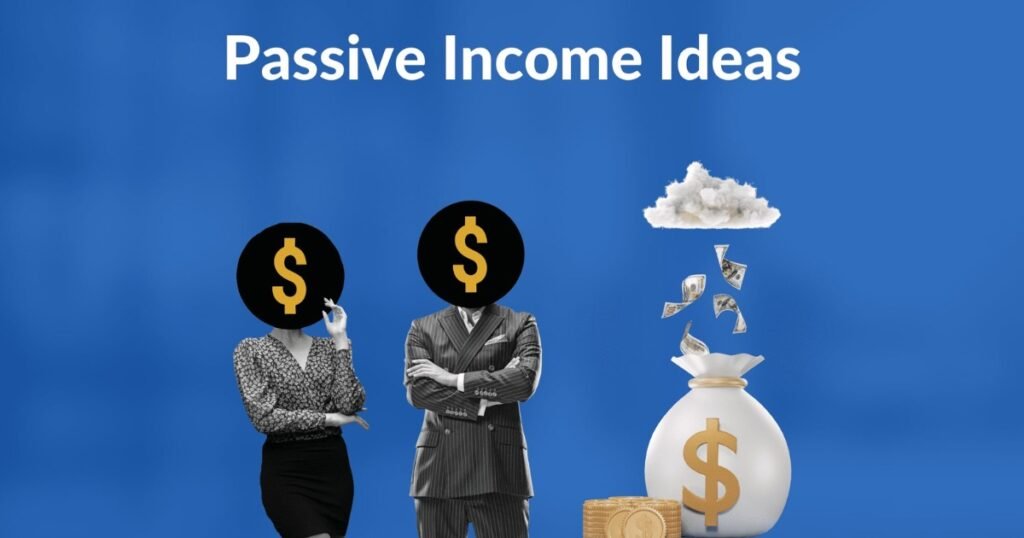
The financial landscape of 2026 has redefined what it means to “earn while you sleep.” We are now in the era of Passive Income 2.0, where the traditional delay between effort and earnings has been drastically compressed by AI automation and fractional asset ownership.
Passive income is not a “get-rich-quick” scheme; it is a delayed return on effort. You either invest Time (to build a digital asset) or Capital (to buy a financial asset). For beginners, the goal is to find low-barrier entry points that offer a high “Time to First Dollar” (TTFD) and long-term scalability.
The Realistic Shift: Why Passive Income Matters in 2026
In a world of fluctuating inflation and rapid job displacement, diversifying your income streams is no longer optional—it is a survival strategy. Whether you are a student, a 9-to-5 professional, or a retiree, the objective is to build a “revenue snowball” that compounds over time.
1. High-Yield Cash & Fixed Income (Low Risk)
Best for: Beginners with immediate capital and zero time for management.
In early 2026, keeping “lazy” cash in a standard checking account is a financial mistake. With interest rates stabilizing, High-Yield Savings Accounts (HYSA) and Money Market Funds remain the safest entry points for beginners.
-
High-Yield Savings Accounts: Top-tier digital banks like Openbank and Vio Bank are currently offering between 4.0% and 5.0% APY.
-
Money Market Funds: Platforms like Vanguard or Fidelity offer funds that invest in short-term debt, often yielding slightly higher than traditional savings accounts with minimal added risk.
-
Pros: Instant liquidity, FDIC insurance (up to $250,000), and zero “sweat equity” required.
-
Cons: Returns are limited by market interest rates; they rarely “build wealth” as much as they “protect” it.
2. Dividend Growth Investing (Moderate Risk)
Best for: Long-term wealth building and portfolio diversification.
Dividend investing involves buying shares of profitable companies that distribute a portion of their earnings to shareholders. For a beginner, the gold standard is the Dividend Aristocrat list—companies that have increased their dividend payouts for at least 25 consecutive years.
Top Dividend Picks for 2026/Passive Income Ideas for Beginners
Recent market data highlights several robust options for the 2026 fiscal year:
-
Atmos Energy (ATO): A defensive utility play with 42 years of consecutive increases.
-
PepsiCo (PEP): A consumer staple giant that remains resilient across economic cycles.
-
Medtronic (MDT): A healthcare leader benefiting from an aging global population.
Pro-Tip: Use a DRIP (Dividend Reinvestment Plan). Instead of taking the cash, set your brokerage account to automatically buy more shares. This triggers Compound Interest, turning a small stream of income into a massive asset over a decade.
3. Digital Asset Creation & AI Automation (High Scalability)
Best for: Beginners with $0 but 5–10 hours of free time per week.
This is where “Passive Income 2.0″ shines. In 2026, you can use Agentic AI—autonomous agents that can research, design, and even market products for you.
A. Print-on-Demand (POD) 2.0
Traditional POD was hard. Today, tools like Gemini (Nano Banana) and Midjourney allow you to generate hyper-realistic, high-demand designs in seconds.
-
Research: Use AI to find “gaps” on marketplaces like Etsy or Amazon.
-
Design: Generate high-resolution art.
-
Automate: Connect your store to Printful or Printify. When a customer buys, they print and ship it. You keep the margin.
B. Digital Templates & Notion Ecosystems
The “Productive Professional” market is booming. Selling Notion templates, Excel trackers, or AI prompt libraries on platforms like Gumroad requires zero inventory and has 98% profit margins.
4. Fractional Real Estate (The Modern Landlord)
Best for: Those who want real estate exposure without the “toilet-fixing” headaches.
You no longer need $50,000 for a down payment. Platforms like Lofty and Arrived have democratized the property market.
-
Lofty: Uses blockchain technology to let you buy $50 “tokens” in rental properties. You receive daily rental income directly to your digital wallet.
-
REITs (Real Estate Investment Trusts): Available through apps like Vanguard, these allow you to invest in commercial properties (malls, data centers) like you would a stock.
| Asset Type | Starting Capital | Management Effort | Liquidity |
| Physical Rental | $20,000+ | High | Low |
| Fractional (Lofty) | $50 | Low | High |
| REITs | $10 | Zero | High |
5. Peer-to-Peer Sharing & Local Assets
Best for: Monetizing things you already own.
If you have a car, a spare room, or even an empty garage, you are sitting on an “underutilized asset.“
-
Turo: Rent your car out in high-demand cities (Austin, London, Dubai).
-
Neighbor.com: Rent out your basement or garage as secure storage for locals.
-
Vending Machines: A “boring” but highly effective local business. A well-placed machine in a 2026 co-working space can generate $300–$600/month with only 2 hours of weekly maintenance.
The 2026 Tax & Compliance Checklist
Before you start earning, you must understand the “boring” side of passive income to avoid IRS or local tax authority audits.
-
The 1099-K Threshold: As of 2026, the IRS reporting threshold for third-party payment apps (Venmo, PayPal) has reverted to $20,000 and 200 transactions. However, many states have lower limits (as low as $600).
-
Digital Asset Reporting: If you use platforms like Lofty or deal in crypto-staking, ensure you track your Capital Gains. Starting in 2026, digital assets must be reported on Form 1099-DA.
-
Self-Employment Tax: If your “passive” side hustle becomes a significant business, you may owe self-employment tax. Setting up an LLC can often provide better tax treatment.
Common Mistakes: The “Red Flags” of 2026
-
The “Zero Effort” Myth: Every passive stream requires front-loaded work. If a guru tells you otherwise, they are selling you a dream, not a business.
-
Predatory Masterclasses: Avoid “mentorships” that cost $5,000+ promising “automated wealth.” All the information you need is available in high-quality documentation and vetted forums.
-
Lack of Diversification: Don’t put all your money into one “hot” AI stock or one rental property. Spread your risk across different asset classes.
7+ Frequently Asked Questions (FAQs)
1. What is the most realistic passive income for beginners? The most realistic entry point is a combination of a High-Yield Savings Account for safety and Digital Product Sales (Etsy/Gumroad) for growth. One requires capital; the other requires time.
2. How can I make $1,000 a month with no money? Focus on “Sweat Equity.” Content creation (YouTube/Blogging) or Affiliate Marketing are the only ways to build a $1,000/month stream without an initial cash investment, though it may take 6–12 months to scale.
3. Is passive income taxable in 2026? Yes. In the US, it is taxed as either ordinary income or capital gains. Always set aside 20–30% of your earnings for tax season.
4. Are dividend stocks better than index funds? Dividend stocks provide regular cash flow, which is great for “income.” Index funds (like the S&P 500) generally offer better total “growth.” Beginners often benefit from a mix of both.
5. Can AI really manage my passive income? AI can automate tasks like customer service, content drafting, and data analysis, but it cannot “manage” your strategy. You still need to be the “CEO” who makes the final decisions.
6. What is the “Time to First Dollar” (TTFD)? TTFD is the duration between starting and receiving your first payment. HYSAs have a TTFD of 30 days. A blog might have a TTFD of 180 days.
7. Is rental property really passive? Only if you hire a property management company. Otherwise, dealing with repairs and tenants makes it a part-time job.
Conclusion:
Don’t let “analysis paralysis” stop you. Follow this simple path to start:
-
Day 1-7: Move your savings to a 4.5%+ APY account.
-
Day 8-20: Pick ONE digital asset (e.g., Print-on-Demand) and create 10 designs using AI tools.
-
Day 21-30: Open a brokerage account and buy your first fractional share of an Index Fund (VOO) or a Dividend Aristocrat (PEP).
The goal isn’t to be rich tomorrow; it’s to be freer next year. Start small, automate early, and let the 2026 economy work for you.
Read more: Saving Vs Investing……………………