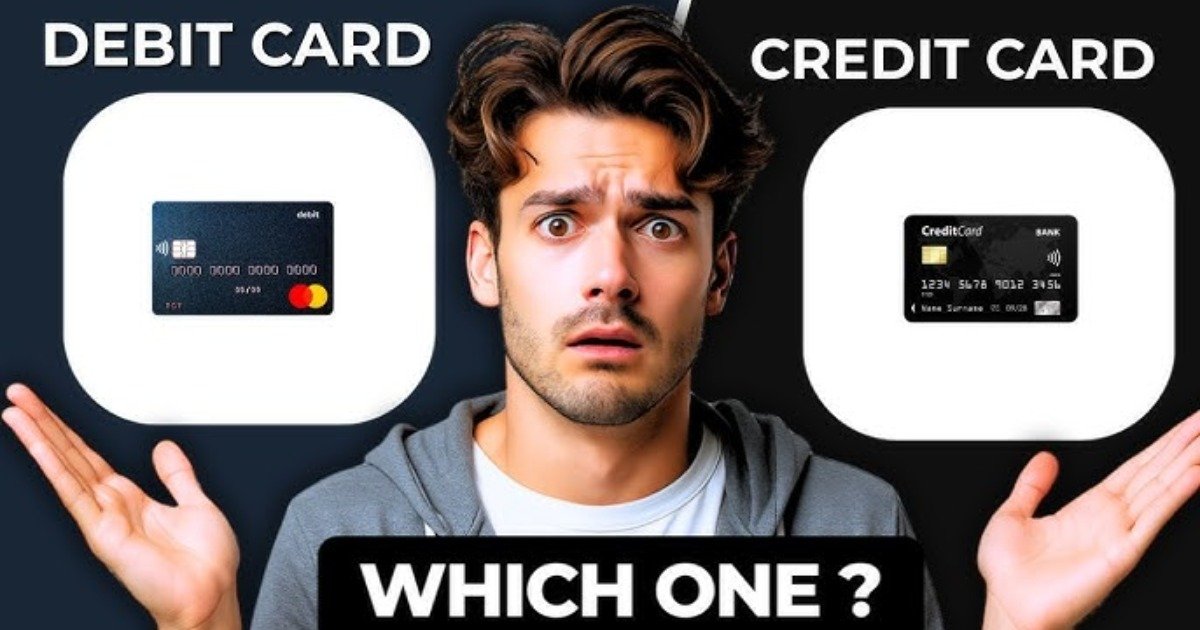
In 2026, the plastic or metal card in your wallet is no longer just a physical tool/Debit vs. Credit Card—it is the primary interface for your financial identity. While debit and credit cards may look identical at a checkout terminal, they operate on entirely different “payment rails“ that dictate your fraud protection, your ability to build a credit score, and even how your autonomous AI shopping agents handle your money.
Whether you are a consumer managing a household budget or a business owner navigating merchant interchange fees, choosing between debit and credit is a high-stakes decision. This guide breaks down the “what, why, and how” of modern payment methods, including the latest 2026 shifts in agentic commerce and stablecoin-linked cards.
1. The Core Difference: Whose Money Are You Using?
The fundamental distinction between these two cards lies in the source of funds.
-
Debit Cards: When you swipe a debit card, the funds are drawn directly from your personal checking account. You are spending money you already own. It is a “pay-now” system.
-
Credit Cards: When you use a credit card, you are borrowing money from a financial institution (the issuer) up to a pre-approved line of credit. You are essentially taking out a micro-loan that you agree to pay back later. It is a “pay-later” system.
Comparison at a Glance (2026 Standards)
| Feature | Debit Card | Credit Card |
| Source of Money | Your Bank Account | Bank’s Line of Credit |
| Fraud Liability | High (Direct hit to cash) | Low (Statutory $50 limit) |
| Credit Score Impact | None | High (Reports to bureaus) |
| Spending Limit | Account Balance | Credit Limit |
| 2026 AI Readiness | Limited “Safe” Guardrails | High (Tokenized Agent Support) |
| Rewards | Rare / Merchant-specific | Robust (Points, Miles, Cash) |
2. Why it Matters: The “Fraud Liability Buffer”
The biggest “why” behind choosing a credit card for most transactions is security. In 2026, cyber-attacks and sophisticated AI scams have made fraud liability a top priority.
The Debit Fraud Gap
If your debit card is compromised, a criminal can empty your actual bank account. While banks have fraud detection, that money is physically gone until the investigation is complete. This can lead to bounced checks, missed rent, and a “cash-flow freeze.”
The Credit Card Shield
Under regulations like the Fair Credit Billing Act (FCBA) in the U.S. or Section 75 in the UK, your liability for unauthorized charges is strictly limited (often to $0 or $50). Crucially, because you haven’t paid the bill yet, the disputed money never leaves your bank account. You are effectively using the bank’s money as a buffer between you and the fraudster.
3. Who Should Use What? (B2C vs. B2B Intent)/Debit vs. Credit Card
For the Individual Consumer (B2C)
-
Use Credit for: Large purchases, online shopping, travel (hotels/car rentals), and building a FICO or VantageScore.
-
Use Debit for: ATM withdrawals, strict budgeting (if you struggle with debt), and small daily purchases at local “Mom and Pop” shops that may offer a cash or debit discount.
For the Small Business Owner (B2B)
In 2026, the Credit Card Competition Act (CCCA) has begun to reshape how businesses view cards.
-
The Merchant Perspective: Businesses often prefer customers to use debit because interchange fees (the “swipe fees” paid to banks) are significantly lower for debit transactions.
-
The Business Buyer: Many businesses use “Commercial Credit Cards” to manage cash flow gaps, though these often carry higher interchange rates that affect the merchants they buy from.
4. How It Works: The 2026 “Agentic Commerce” Shift
A major evolution this year is the rise of Agentic Commerce—where AI agents (like those in your phone or browser) make purchases on your behalf.
-
Credit Cards & AI Agents: Credit cards are currently the “gold standard” for AI-led shopping. Protocols like Visa’s Trusted Agent Protocol or OpenAI’s Agentic Commerce Protocol (ACP) allow you to issue a “shared payment token” to your AI. If your AI agent accidentally orders 500 boxes of detergent instead of 5, the “chargeback” and “undo” mechanisms of credit cards provide a safety net that debit cards simply cannot match.
-
Debit Cards & Spending Limits: While some 2026 debit cards offer “Programmable Wallets” where you can set strict $10 limits for your AI assistant, the risk remains higher if the agent’s security is breached.
5. Types of Cards: Beyond Basic Plastic
As the financial landscape matures, we now see hybrid variants that blur the lines:
1. Secured Credit Cards
Ideal for those with no credit history. You provide a cash deposit (e.g., $500), which becomes your credit limit. It functions like a credit card for your score but protects the bank from risk.
2. Stablecoin-Linked Debit Cards
A 2026 trend where your card is linked to a Stablecoin wallet (USDC/PYUSD). When you swipe, the system instantly “sandwiches” the transaction—converting your digital assets to fiat currency to pay the merchant. These are popular for global travelers looking to avoid high FX (Foreign Exchange) fees.
3. Virtual Cards
Both debit and credit providers now offer virtual-only numbers. These are perfect for subscriptions or “one-time-use” online shopping to ensure your “real” card number is never exposed to a data breach.
6. Pros and Cons
Credit Cards
-
Pros: Build credit history, earn travel rewards/cashback, superior fraud protection, “Grace Period” (0% interest if paid in full).
-
Cons: Potential for revolving debt, high interest rates (APR) if balance is carried, annual fees on premium cards.
Debit Cards
-
Pros: No debt risk, easy ATM access, no interest charges, simplified budgeting.
-
Cons: No credit building, weaker fraud protections, potential for “Overdraft Fees,” bank account exposure.
7. Decision Framework: When to Use Which?
| Scenario | Recommended Card | Reason |
| Booking a Hotel / Car Rental | Credit | They place “holds” on funds. Debit freezes your actual cash; Credit only uses your limit. |
| Shopping at a New Website | Credit | High risk of fraud; you want the legal “Chargeback” protection. |
| Withdrawing Cash | Debit | Credit cards charge “Cash Advance” fees ($10+) and high interest immediately. |
| AI Shopping Agent Task | Credit | Superior “Intent Mandate” protocols and liability shift. |
| Strict Monthly Budgeting | Debit | Prevents spending money you don’t have; no “Revolving Debt” trap. |
8. Common Mistakes & Warnings
-
Treating Credit Like Income: A common trap is viewing your credit limit as “extra money.” Always aim to pay your Statement Balance in full to avoid 20%+ interest rates.
-
Using Debit for Everything: While it feels “safer” to avoid debt, using debit for high-value items (like a laptop or flight) means you lose out on Purchase Protection and Extended Warranties typically bundled with credit cards.
-
Ignoring the “Debit Fraud Gap”: If you lose your debit card, you must report it within 2 business days in many jurisdictions to limit your liability to $50. Waiting longer can see that liability rise to $500 or more.
People Also Ask (FAQs)
1. Does a debit card build credit?
No. Debit cards are not reported to credit bureaus (like Experian or TransUnion) because you are not borrowing money. To build credit, you generally need a credit card or a loan.
2. Is it better to use credit or debit online?
Credit is almost always better. It provides a layer of legal protection (Chargebacks) that makes it easier to get your money back if the merchant doesn’t ship the item or the site is a scam.
3. Why do gas stations and hotels prefer credit cards?
They often place a temporary “pre-authorization hold” on your card to ensure you can pay. On a debit card, this can tie up your actual grocery or rent money for several days.
4. What are interchange fees, and do they affect me?
These are fees merchants pay to process your card. While you don’t see them directly, they can lead to “Surcharges” at small businesses or higher prices overall. The Credit Card Competition Act of 2026 aims to reduce these fees in the US.
5. Can I use a debit card for an AI agent?
Yes, but it’s riskier. If the AI makes an error or is hacked, the funds are taken directly from your bank. Many experts recommend using a Virtual Credit Card with a set limit for AI tasks.
6. Are there rewards for debit cards in 2026?
Yes, some fintechs and neobanks now offer “cashback debit,” though the rewards are usually much lower (0.5%–1%) compared to credit cards (2%–5%).
7. Is a “Secured Card” a debit or credit card?
It is a credit card. Even though you provide the cash upfront, the issuer reports your payments to credit bureaus, making it a powerful tool for rebuilding your score.
Conclusion
In the 2026 financial ecosystem, the “Debit vs. Credit” debate is no longer about which card is better, but which tool is right for the specific job.
-
For protection and growth: Lean on Credit. It builds your future borrowing power and protects your current assets from the growing tide of AI-driven fraud.
-
For control and simplicity: Lean on Debit. It is the ultimate budgeting tool that ensures you stay within your means and avoid the cycle of high-interest debt.
Click here: Credit Card Interest …………………….