Meta Description: Master Financial Planning for Students in 2026. Expert tips on AI budgeting, global currency hacks, building credit, and avoiding “Buy Now, Pay Later” traps.
Financial literacy is no longer just about balancing a checkbook; in 2026, it is a hybrid soft-skill that sits at the intersection of behavioral psychology and digital arithmetic. For the modern student, the challenge isn’t just a lack of funds—it’s the complexity of managing those funds across digital assets, high-inflation environments, and a sea of “hidden” subscription costs.
Whether you are an undergraduate in London, an international student in Boston, or a remote learner in Singapore, the principles of resource allocation remain universal. This guide provides a strategic roadmap to achieve financial independence, minimize debt, and build a post-graduation “nest egg” while navigating the unique economic landscape of 2026.
1. The 2026 Student Budgeting Framework
The days of static spreadsheets are over. Effective budgeting now requires a dynamic approach that accounts for Cost of Living Adjustments (COLA) and the volatility of the modern economy.
The 50/30/20 Rule: A Realistic Baseline
While critics argue that high rent in “Tier 1” cities makes the 50/30/20 rule difficult, it remains the gold standard for intentional spending:
-
50% for Needs: Rent, groceries, utilities, and basic transport.
-
30% for Wants: Dining out, hobbies, and that “Social FOMO” travel.
-
20% for Financial Goals: Debt overpayment, emergency funds, and your Roth IRA or ISA.
5 Steps to Audit Your Student Budget
-
Aggregate All Income: Include scholarships (FAFSA/UCAS disbursements), part-time wages, and parental support.
-
Identify “Leakage”: Use an AI tool to scan your last 90 days of transactions for “zombie” subscriptions.
-
Set a “Global Buffer”: If you are an international student, allocate a 20-25% buffer to protect against Currency Fluctuations (FX Risk).
-
Assign Every Dollar a Job: This is the Zero-Based Budgeting method—if $100 is left over, it must be moved to savings or debt, not left to “disappear” in your checking account.
-
Automate the “Push”: Set up an automated transfer to a High-Yield Savings Account (HYSA) the day your funding arrives.
2. Global Arbitrage: Managing Money Across Borders
For the 2026 international student, “Global Arbitrage” is the secret to staying afloat. Exchange rates can swing 5-10% in a single semester, effectively raising your tuition without warning.
Managing FX Risks and International Transfers
-
Local Bank Accounts: Open a local account immediately upon arrival. This is essential for avoiding foreign transaction fees and building a local credit history.
-
Fintech over Traditional Banks: Use platforms like Wise or Revolut for international transfers. Traditional banks often hide a 3-5% markup in the exchange rate; fintechs usually offer the “mid-market” rate for a transparent fee.
-
The “TrueRate” Strategy: Always compare the total cost of a transfer (fee + exchange rate markup). A “zero-fee” transfer is often more expensive if the exchange rate is poor.
3. Leverage AI: Your 2026 Financial Co-Pilot
In 2026, you don’t need a human financial advisor to get started. Generative AI and agentic banking tools can handle the heavy lifting of data analysis.
How to Prompt AI to Analyze Your Finances
Instead of guessing where your money goes, use a privacy-focused AI (like Google Gemini or a dedicated tool like Monarch Money) to perform a deep-dive audit. Try these prompts:
-
“Analyze my CSV export and identify my top 5 spending categories over the last 3 months.”
-
“Identify recurring payments that have increased in price by more than 10% this year.”
-
“Based on my $2,000 monthly income, create a 50/30/20 plan that prioritizes a $500 emergency fund.”
Expert Insight: AI tools are excellent for Predictive Budgeting. They can forecast that your utility bill will spike in July based on regional weather patterns, allowing you to save in advance.
4. Building Credit and Avoiding “The Debt Trap”
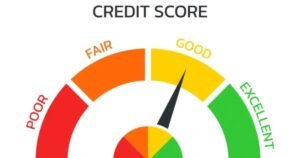
Your Credit Score (FICO or equivalent) is a digital resume for your financial reliability. In 2026, lenders have tightened standards, making early credit-building essential.
The Student Credit Roadmap
-
Student Credit Cards: Look for “No Annual Fee” cards with cashback on groceries or transit.
-
The 30% Rule: Never use more than 30% of your limit. If your limit is $1,000, keep the balance under $300.
-
Warning: The BNPL Trap: “Buy Now, Pay Later” (BNPL) services like Klarna or Afterpay are rampant in 2026. While they seem harmless, they often don’t help build your credit score but can hurt it if you miss a payment. They encourage “lifestyle creep” by making expensive items feel cheap.
5. Investing Early: The Power of Compound Interest for Gen Z
Waiting until graduation to invest is the most expensive mistake a student can make. Thanks to Compound Interest, $50 invested at age 19 is worth significantly more than $100 invested at age 29.
Tax-Advantaged Accounts
| Account Type | Key Benefit | Ideal For |
| Roth IRA (US) | Tax-free withdrawals in retirement. | Students in low tax brackets. |
| ISA (UK) | Tax-free interest and capital gains. | Flexible savings and investing. |
| HYSA | High interest (currently ~4-5% APY). | Emergency funds and short-term goals. |
The $10 Strategy: You don’t need thousands. Many 2026 apps allow you to start a Roth IRA with as little as $10. The goal is to build the habit of investing.
6. Managing Student Loans and Interest Capitalization/Financial Planning for Students
Student loans are “fiat debt” that can grow rapidly if ignored.
-
Interest Capitalization: This occurs when unpaid interest is added to your principal balance. If you have Unsubsidized Loans, try to pay at least the monthly interest while in school to prevent the balance from ballooning.
-
Scholarship Arbitrage: Dedicate two hours every Sunday to “Scholarship Hunting.” In 2026, many niche grants for “AI Ethics,” “Sustainability,” and “First-Gen Students” go unclaimed.
7. Behavioral Finance: Fighting Social Spend Pressure
Financial planning is 20% math and 80% behavior. The “Social FOMO” (Fear Of Missing Out) is the #1 reason students fail their budgets.
Decision Framework: “The 48-Hour Rule”
Before making a non-essential purchase over $50:
-
Wait 48 hours.
-
Calculate how many hours of work (at your part-time wage) it takes to pay for it.
-
If you still want it and have the “Wants” budget available, proceed.
2026 Student Discount Checklist
-
Tech: Apple, Samsung, and Microsoft (up to 15% off).
-
Transport: Student railcards or bus passes (usually 30%+ savings).
-
Software: Adobe Creative Cloud and Spotify/Apple Music (50% off).
-
Food: Use apps like “Too Good To Go” to buy surplus food from local cafes at a 70% discount.
FAQs (People Also Ask)
1. Is the 50/30/20 rule realistic for students in 2026?
It is a target, not a law. If your rent takes up 60% of your income, you may have to adjust your “Wants” to 20% and “Savings” to 10%. The key is having a predefined ratio.
2. How do I start a Roth IRA with only $10?
Many modern fintech platforms (like Acorns or Fidelity) have removed account minimums. You can open the account for free and set up a $10 monthly “micro-contribution.”
3. What are the best budgeting apps for students in 2026?
-
YNAB: Best for strict discipline (Free for students for 1 year).
-
Monarch Money: Best for AI-driven forecasting and syncing multiple accounts.
-
PocketGuard: Best for a simple “In My Pocket” view of spendable cash.
4. How can international students avoid high FX fees?
Open a multi-currency account (like Wise) and a local bank account in your host country. Avoid “Dynamic Currency Conversion” at ATMs—always choose to be charged in the local currency.
5. Should I pay off my student loans or invest first?
If your loan interest rate is lower than the return on a High-Yield Savings Account (e.g., loan is 3%, HYSA is 5%), keep the money in the HYSA. If the loan is 8%+, prioritize paying it down.
6. What is “Interest Capitalization”?
It is when the interest you owe is added to the principal of your loan. This means you eventually start paying “interest on your interest,” which makes the debt much harder to pay off later.
7. Are “Buy Now, Pay Later” (BNPL) services safe for students?
They are high-risk. While they don’t charge interest if paid on time, they trick the brain into overspending. One missed payment can lead to high fees and a damaged credit report.
Conclusion
Mastering your finances as a student is the ultimate competitive advantage. By leveraging AI tools, understanding global currency moves, and respecting the power of compound interest, you aren’t just surviving university—you are architecting your future freedom.
Read more: Reduce Monthly Expenses………….