Meta Description: Learn what a good credit score is in 2026. Explore FICO and VantageScore ranges, global differences for expats, and how AI now impacts your creditworthiness.
A good credit score is the silent engine of your financial life. In 2026, this three-digit number does more than just approve a credit card; it determines your ability to compete in a tight housing market, the premiums you pay for insurance, and even your eligibility for certain high-level employment opportunities.
Understanding where you stand requires looking beyond a single number. With the integration of AI-driven scoring and the rise of “trended data,” the definition of a “good” score has evolved.
What is a Good Credit Score in 2026?
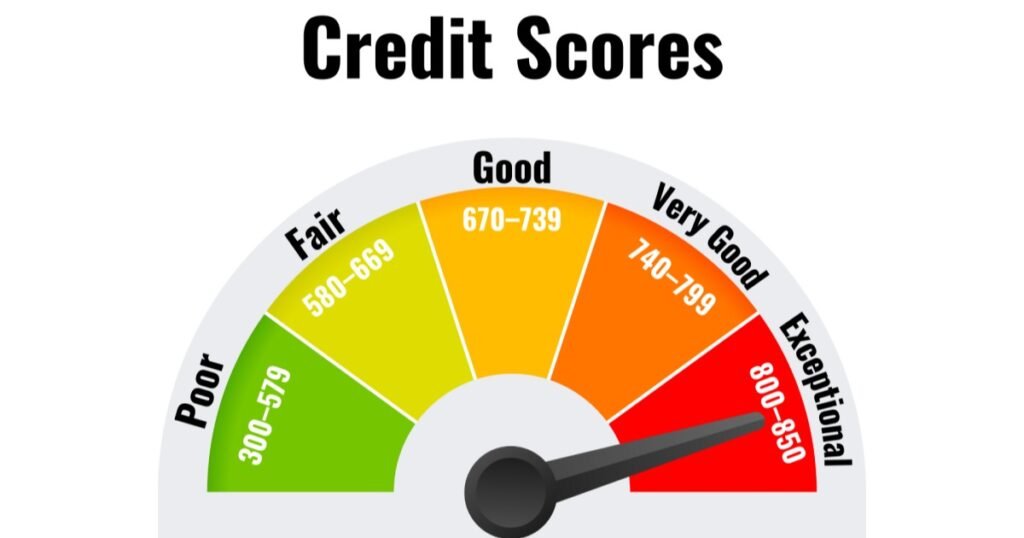
A good credit score is typically defined as 670 to 739 on the FICO® scale or 661 to 780 on the VantageScore® scale. Falling within these brackets signals to lenders that you are a “lower-risk” borrower, making you eligible for competitive interest rates and standard loan products.
While these ranges provide a baseline, the reality is more nuanced. Lenders in 2026 are increasingly looking at your “financial trajectory”—whether your debt is shrinking or growing over time—rather than just a static snapshot of your current accounts.
2026 Credit Score Range Breakdown
| Category | FICO® Score Range | VantageScore® 3.0/4.0 | Financial Impact |
| Exceptional / Excellent | 800–850 | 781–850 | Lowest APRs; VIP perks; no-deposit utilities. |
| Very Good | 740–799 | 661–780 | Highly competitive rates; instant approvals. |
| Good | 670–739 | 601–660 | Standard rates; most credit cards accessible. |
| Fair | 580–669 | 500–600 | Higher interest; limited loan options. |
| Poor / Very Poor | 300–579 | 300–499 | Rejections likely; secured cards only. |
The Mechanics of Creditworthiness: How Scores are Calculated
To understand why a score is “good,” you must understand the components that the Fair Credit Reporting Act (FCRA) allows bureaus like Experian, Equifax, and TransUnion to track.
-
Payment History (35%): The single most influential factor. In the age of AI, missing a single payment can be more damaging than it was a decade ago, as algorithms now predict future defaults with higher sensitivity.
-
Amounts Owed / Credit Utilization (30%): This is the ratio of your outstanding debt to your total credit limits. Keeping this below 10% is the hallmark of “Exceptional” scorers, while 30% is the maximum for a “Good” rating.
-
Length of Credit History (15%): The age of your oldest account, newest account, and the average age of all accounts.
-
Credit Mix (10%): A healthy blend of revolving credit (cards) and installment loans (mortgages, auto loans, student loans).
-
New Credit (10%): The frequency of “hard inquiries.” Frequent applications signal financial distress to modern risk models.
The 2026 Shift: AI, UltraFICO, and Trended Data
The credit landscape has moved toward a more holistic view of the consumer. In 2026, two major shifts have redefined the “Good” threshold:
Trended Data
Lenders no longer just see your current balance. They see your behavior over the last 24 months. Are you a “transactor” (paying off the full balance monthly) or a “revolver” (carrying debt)? Even with a 720 score, a “revolver” whose debt is steadily climbing may be viewed more cautiously than a “transactor” with a 680.
Alternative Data and AI
For those with a “thin file” (little credit history), AI-driven models like UltraFICO and VantageScore 4.0 now incorporate alternative data. This includes:
-
Rental Payment History: Finally being recognized as a major indicator of creditworthiness.
-
Cash Flow Patterns: Linking your bank account to show consistent income and utility payments.
-
Subscription Services: In some models, consistent payments for recurring digital services can provide a minor boost to those starting from scratch.
Global Context: Credit Scores for Expats and International Borrowers
If you are moving between the USA, UK, Canada, or Australia, you likely realized that credit history does not traditionally cross borders.
-
USA vs. UK: While the US uses a 300-850 scale, the UK’s Experian scale goes up to 999. A “good” score in London looks very different numerically than one in New York.
-
The Expat Gap: In 2026, companies like Nova Credit have made it easier to “transport” your credit history from countries like India (CIBIL) or Australia to the US, allowing newcomers to access “Good” tier interest rates immediately.
-
Germany (Schufa): Unlike the US model, the German Schufa system is often based on “negative markers” (defaults) rather than a constant pursuit of a high number.
The Commercial Reality: What a “Good” Score Buys You
The difference between a “Fair” (650) and a “Good” (720) score isn’t just a label—it’s a massive difference in your cost of living.
Mortgages and Loan-to-Value
For a home buyer, a score of 740+ often secures the “prime” rate. If you are sitting at 670, you might pay an additional 0.75% to 1.5% in interest. On a $400,000 mortgage, that seemingly small gap results in tens of thousands of dollars in extra interest over the life of the loan.
Credit Cards and CAC
From a B2B perspective, banks use these scores to manage Customer Acquisition Cost (CAC). Consumers in the “Good” to “Excellent” range are cheaper for banks to service because they default less often. This is why you receive “pre-approved” offers in the mail only once you cross the 700-point threshold.
How to Improve Your Score: A Procedural Guide
If you are currently below the 670 mark, follow this structured framework to move into the “Good” category:
-
The Audit: Use a service like Credit Karma or your bank’s built-in tool to identify any errors. Dispute any “hard inquiries” you didn’t authorize or late payments that were actually on time.
-
The 10% Utilization Target: Pay down your balances so they represent less than 10% of your limits. If you can’t pay them down, request a credit limit increase to change the ratio (ensure it’s a “soft pull”).
-
The “Automated Minimum” Strategy: Set every account to autopay the minimum amount. This ensures you never suffer a 30-day late marker, which is the “death blow” to a good score.
-
Strategic New Credit: If you have a thin file, consider a “Credit Builder Loan” or a secured card. In 2026, ensure these providers report to all three major bureaus.
Common Pitfalls and Fears
The “Credit Trap”: Many young professionals fear debt so much they avoid credit cards entirely. This results in a “thin file,” which AI models often penalize as much as a poor score because there is no data to predict behavior.
Identity Theft: A sudden, unexplained drop in a “Good” score is often the first sign of fraud. Modern monitoring tools are now essential for maintaining a high score, acting as an early warning system.
The Closing Account Myth: Do not close your oldest credit card once you pay it off. Doing so shortens your “Age of Credit” and can instantly drop a “Good” score back into the “Fair” range.
Decision Framework: When to Apply for Credit
| If your score is… | Your action should be… |
| Below 600 | Focus exclusively on rebuilding; avoid all new “hard” applications. |
| 600–670 | Research “Fair Credit” cards; look for pre-qualification tools that use “soft pulls.” |
| 670–740 | You are ready for most standard mortgages and auto loans. Shop around for the best APR. |
| 740+ | You have the leverage. Negotiate with lenders for the absolute lowest rates and fee waivers. |
People Also Ask (FAQs)
1. Is 720 a good credit score for a car loan in 2026?
Yes. A 720 score is considered “Good” to “Very Good.” In the 2026 auto market, this will typically qualify you for most manufacturer incentivized rates, though the absolute lowest “0% APR” deals often require a 740 or higher.
2. How does AI impact my credit score calculation now?
AI models now analyze patterns rather than just totals. They look at “Trended Data,” which means they can see if you are slowly paying off debt or if your spending habits suggest a coming financial crisis, even before you miss a payment.
3. Can I buy a house with a 640 credit score?
Yes, you can qualify for FHA loans and some conventional products with a 640. However, you will likely pay higher private mortgage insurance (PMI) and a higher interest rate compared to someone with a “Good” (700+) score.
4. Why is my Experian score different from my TransUnion score?
Not all lenders report to all three bureaus, and different bureaus may use different versions of the FICO or VantageScore model. It is normal to see a variance of 10–20 points between them.
5. Does checking my own score lower it?
No. Checking your own score is a “soft inquiry” or “soft pull.” Only a “hard inquiry”—which happens when a lender checks your credit for a loan application—can lower your score.
6. How long does a late payment stay on my report?
A late payment stays on your credit report for seven years. However, its impact on your score diminishes over time, especially after the first two years.
7. What is the difference between FICO 8 and FICO 10T?
FICO 8 is the most widely used version for credit cards. FICO 10T is the newer “Trended” version that looks at your payment behavior over the last 24 months. In 2026, more mortgage lenders are moving toward the 10T model.
Conclusion
A good credit score in 2026 is a reflection of both your past discipline and your future potential. By maintaining a score above 670, you position yourself to navigate the global economy with lower costs and greater flexibility.
Whether you are a B2C consumer looking for your first home or a B2B professional analyzing credit risk, the fundamentals remain: pay on time, keep balances low, and monitor your data frequently. Your credit score is not just a number—it is your financial reputation in a digital, AI-driven world.
Read more: Low Fee Credit Card………………….