Meta Description: Learn how to establish Build Credit History fast in 2026. Discover the latest on FICO 10T, alternative data reporting, and tools for students & international expats.
Credit history is the documented record of your ability to borrow money and repay it on time. In 2026, this “financial resume” is no longer just about credit cards; it determines your eligibility for competitive mortgage rates, the security deposit required for your next apartment, and even your premiums for auto insurance.
For many, the initial hurdle is “credit invisibility“—having a “thin file” that contains too little data for a score to be generated. This guide provides a modern roadmap to establishing a robust credit profile, moving from invisible to high-score status using the latest financial technologies and reporting models.
The 2026 Credit Landscape: What Has Changed?
In the past, credit was strictly binary: you either had a credit card or you didn’t. Today, scoring models like FICO 10T and VantageScore 4.0 have evolved to be more inclusive.
The “T” in FICO 10T stands for Trended Data. Unlike older versions that only looked at your current balances, this model analyzes your financial trajectory over the last 24 months. It rewards “transactors”—those who pay off balances monthly—more than “revolvers” who carry debt. Additionally, the rise of Alternative Data Reporting means your everyday bills can now contribute to your score.
5 Proven Steps to Establish Credit from Scratch
If you are starting with zero credit history, follow this procedural sequence to generate a score in as little as 3 to 6 months.
-
Check for an Existing “Thin File”: Visit the three major bureaus—Equifax, Experian, and TransUnion—to ensure no fraudulent accounts exist in your name.
-
Apply for a Secured Credit Card: Unlike traditional cards, these require a refundable security deposit that typically serves as your credit limit.
-
Report “Non-Traditional” Payments: Use tools like Experian Boost or rent-reporting services to link your utility, Netflix, and rent payments to your credit file.
-
Consider a Credit Builder Loan: This is a “reverse loan” where you make payments into a locked savings account, and the lender reports each payment as a positive mark.
-
Maintain Low Utilization: Once you have a card, never use more than 10% of your limit. If your limit is $500, keep your balance under $50.
Decision Framework: Choosing Your Starting Point
Not every credit-building tool fits every financial situation. Use the framework below to identify your best entry point based on your current resources.
| If you have… | The Best Tool is… | Why it Works |
| $200+ for a deposit | Secured Credit Card | Provides a revolving line of credit and the fastest path to an “unsecured” card. |
| No upfront cash | Authorized User Status | You “piggyback” on a family member’s long-standing account history. |
| A steady paycheck | Credit Builder Loan | Forces a savings habit while building a history of installment payments. |
| High monthly bills | Alternative Data Apps | Turns existing expenses (Rent, Utilities) into credit-building assets. |
Strategic Tools for Different Audiences
For Students and Young Adults
University students often qualify for Student Credit Cards. These are unsecured (no deposit required) and are designed for those with no history. They often include “good grade” rewards and lower barriers to entry. However, be wary of the high interest rates; always pay the statement in full to avoid debt traps.
For Immigrants and Expats
Moving to a new country often means your credit history “dies” at the border. In 2026, companies like Nova Credit allow for an International Credit Transfer. They translate your home country’s credit report (from regions like the UK, India, or Mexico) into a local equivalent that lenders can use to approve you for cards and apartments immediately.
The Impact of Buy Now, Pay Later (BNPL)
Services like Klarna and Afterpay are now common. While they used to be “invisible,” most major bureaus now include BNPL data.
-
The Risk: Multiple active BNPL agreements can signal financial stress to lenders.
-
The Reward: On-time payments on longer-term BNPL “installments” can help build your credit mix.
Expert Insights: Why “Credit Mix” and “Utilization” Matter
To reach a 700+ score, you must optimize two key entities: Credit Mix and Utilization Ratio.
Credit Mix refers to the variety of accounts you hold. Lenders want to see that you can handle both revolving credit (cards) and installment credit (loans). Adding a small credit builder loan alongside a secured card can often trigger a faster score increase than having two cards.
Credit Utilization is the percentage of your available credit that you are actually using. High utilization (over 30%) is a major red flag. In the 2026 scoring environment, keeping this under 10% is the “Gold Standard” for those trying to establish an elite profile quickly.
Common Risks and Warning Triggers
Establishing credit is a “Your Money Your Life” (YMYL) activity. Mistakes can be costly and long-lasting.
-
Hard Inquiry Spikes: Applying for five cards in one week will cause a “hard inquiry” spike. This suggests desperation and can drop your score significantly.
-
Credit Repair Scams: Avoid any service that promises to “erase” your history or create a “new credit identity.” These are often illegal and ineffective.
-
Co-signing Dangers: If you co-sign for a friend and they miss a payment, that “late” mark hits your report. Never co-sign unless you are prepared to pay the full debt yourself.
Entity Glossary for 2026
-
Bureaus (Equifax, Experian, TransUnion): The three companies that collect and sell your credit information.
-
Manual Underwriting: A process where a human looks at your income and bills instead of a computer-generated score.
-
Thin File: A term for a consumer with fewer than five credit accounts.
-
Alternative Data: Non-debt information (utilities, rent, bank cash flow) used to determine creditworthiness.
-
DTI (Debt-to-Income): Your monthly debt payments divided by your gross monthly income.
People Also Ask (FAQs)
1. How long does it take to get a credit score for the first time?
Usually, it takes 3 to 6 months of active reporting before a FICO score can be generated. VantageScore may produce a score in as little as one month.
2. Can I build credit history with a debit card?
Standard debit cards do not build credit. However, “Credit Builder Debit Cards” now exist that link to your bank account and report your spending as a line of credit.
3. Does checking my own credit score hurt it?
No. Checking your own score is a “soft inquiry” and has zero impact on your credit.
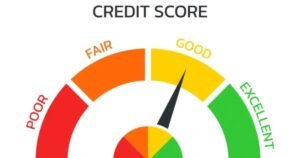
4. Is a 700 credit score good?
Yes, 700 is generally considered “Good” and will qualify you for most standard financial products with favorable rates.
5. Can I build credit without a Social Security Number (SSN)?
Yes. Immigrants can often use an ITIN (Individual Taxpayer Identification Number) to open credit accounts and start their history.
6. Do utility bills count toward credit?
Only if you opt-in to a reporting service. Most utility companies do not report positive data automatically; they only report negative data if you go to collections.
7. What happens if I close my first credit card?
Closing your oldest account can shorten your “Age of Accounts,” which may cause your score to drop. It is usually better to keep it open with a zero balance.
Conclusion
Building credit history is a strategic process of demonstrating reliability. By utilizing modern 2026 tools—such as alternative data reporting and trended scoring models—you can bridge the gap from credit invisibility to financial stability faster than ever before. Start with one manageable account, automate your payments, and monitor your progress monthly.
Read more: Good Credit Score……………………..