Meta Description: Master your finances with expert-verified money saving hacks for 2026. From AI-driven budgeting to high-yield strategies, learn how to save $1,000+ monthly.
In 2026, saving money is no longer just about “clipping coupons”—it is about mastering a digital ecosystem where inflation, AI automation, and behavioral psychology intersect. The “mental load” of managing a household or a small business budget has reached an all-time high, but so has the accessibility of tools designed to solve it.
Whether you are trying to find immediate liquidity for an emergency fund or looking for long-term wealth protection, these expert-verified money-saving hacks are designed to outpace the 2026 economy.
The Foundational Strategy: The 50/30/20 Rule
Before diving into specific hacks, you need a framework to prevent “frugal fatigue.” Popularized by Elizabeth Warren, the 50/30/20 rule remains the gold standard for balanced budgeting.
-
50% for Needs: Rent/Mortgage, utilities, insurance, and basic groceries.
-
30% for Wants: Dining out, streaming services, and hobbies.
-
20% for Savings and Debt Repayment: Emergency funds, 401(k) contributions, and credit card payoffs.
Why it matters: This framework ensures you aren’t just saving, but also living. In an era of high interest rates, prioritizing that 20% toward debt is often your best “investment,” yielding a guaranteed return equal to your interest rate.
Top 10 High-Impact Hacks (The Quick Wins)
For those needing immediate results, these procedural steps can save $500–$1,000 in the first 30 days.
-
The 24-Hour Rule: Wait 24 hours before any non-essential purchase over $50. This simple friction eliminates impulse buying driven by the dopamine hit of the “Add to Cart” button.
-
Cancel “Ghost Subscriptions”: Use AI-driven tools like Rocket Money or Hiatus to scan your bank statements. These agents identify recurring charges you’ve forgotten and can even negotiate lower rates on your behalf.
-
Automated Round-ups: Set your banking app (like Revolut or Monzo) to round up every transaction to the nearest dollar. The “spare change” is swept into a high-yield savings account (HYSA).
-
Vampire Energy Audit: Unplug electronics when not in use. Even in “standby” mode, chargers and appliances can account for up to 10% of your utility bill.
-
Generic Brand Substitution: Switch to store brands for staples like medication, flour, and cleaning supplies. You can save 30% instantly without sacrificing quality.
-
The “Hour-Wage” Calculation: Before buying, ask: “Is this item worth [X] hours of my life at my current pay rate?”
-
Cashback Stacking: Layer a cashback credit card with a browser extension like Rakuten and a store loyalty program.
-
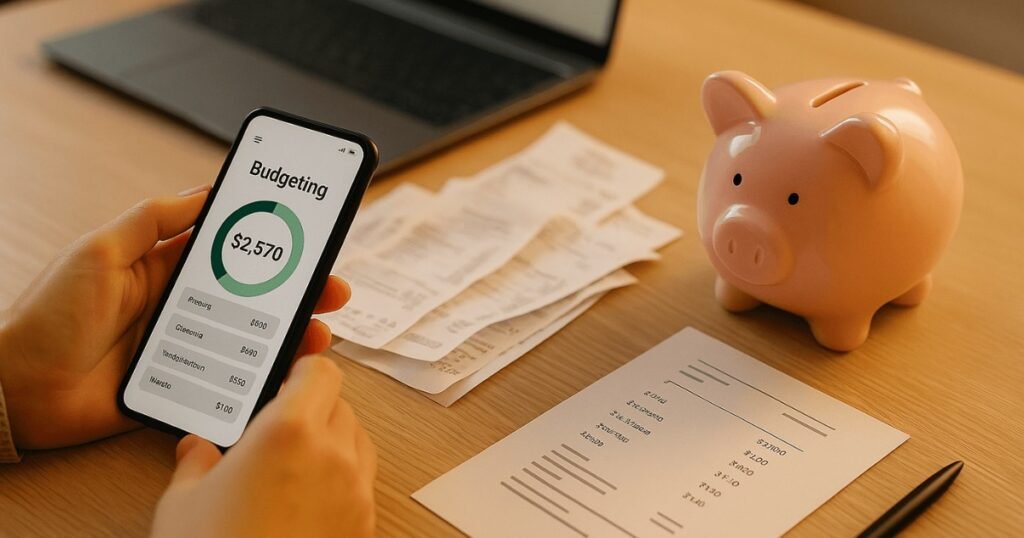
Digital “Cash Stuffing” 2.0: Use virtual “envelopes” or “vaults” in your banking app to earmark money for specific bills as soon as you get paid.
-
The 52-Week Challenge: Save $1 the first week, $2 the second, and so on. By week 52, you’ll have $1,378 tucked away.
-
The “No-Spend” Sprint: Commit to a week where you only spend on essentials (rent/groceries). It’s a powerful way to reset your relationship with discretionary spending.
Leveraging Technology: AI-Agentic Budgeting
In 2026, “Agentic AI” has moved beyond simple chatbots. These are autonomous systems that don’t just tell you that you spent too much—they take action.
| Feature | Traditional Budgeting | AI-Agentic Budgeting (2026) |
| Tracking | Manual entry or basic sync | Predictive categorization & bill forecasting |
| Optimization | User must find savings | AI negotiates internet/phone bills automatically |
| Action | Alerts only | Automatically moves funds based on cash-flow cycles |
| Complexity | High (User needs to be the “CFO”) | Low (AI acts as a personal financial assistant) |
Grocery & Lifestyle Hacks: Beating Food Inflation
The “Big Three” expenses—housing, transport, and food—are where you find the most significant savings.
-
Meal Prepping with a “Pantry First” Approach: Before shopping, look at what you already have. Build your meal plan around existing ingredients to reduce food waste.
-
The “Unit Price” Secret: Don’t look at the total price; look at the price per ounce or gram on the shelf tag. Often, the “bulk” size isn’t actually the best deal.
-
Flashfood & Too Good To Go: Use these apps to buy surplus food from grocers and restaurants at 50%–70% discounts.
-
Loud Budgeting: A 2026 trend where you vocalize your financial boundaries to friends and family. Instead of “I can’t afford it,” say “That’s not in my savings goal for this month.” This reduces the social pressure to overspend on dining and entertainment.
Smart Financial Hacks for Small Businesses & Freelancers
Small business owners and “solopreneurs” face unique challenges, particularly regarding tax liability and overhead.
-
B2B Subscription Audit: Are you paying for Canva Pro, Midjourney, and Adobe? Audit your tech stack monthly. Use open-source alternatives like Figma or GIMP where possible.
-
Strategic Tax Hedging: Set aside 25%–30% of every invoice into a separate HYSA immediately. The interest earned on your “tax money” belongs to you, not the government.
-
Utilize “Buy Nothing” Communities: For office furniture or equipment, check local “Buy Nothing” groups or Facebook Marketplace before buying new. Many businesses offload high-quality gear during office moves.
-
Outsource Smart: Instead of hiring a full-time assistant, use task-specific freelancers or AI tools to handle repetitive admin, saving on benefits and overhead costs.
The “Near Me” Advantage: Local Saving Strategies
While the economy is global, savings are often local.
-
Community Tool Libraries: Instead of buying a $200 drill you’ll use once, check for local tool libraries in your city.
-
City-Specific Tax Holidays: Many regions offer “Sales Tax Holidays” for back-to-school or energy-efficient appliance purchases. Time your big buys accordingly.
-
Local Co-ops: Joining a food co-op can lower your grocery bill by 20% if you contribute a few hours of volunteer time.
Safety & Security in the Open Banking Era: Money Saving Hacks
With the rise of Open Banking standards (PSD3/FiDA), linking your bank account to savings apps is safer than ever, but risks remain.
-
Verify API Security: Ensure any app you use employs 256-bit encryption and Multi-Factor Authentication (MFA).
-
Consent Management: Periodically audit which apps have access to your data. Open Banking allows you to revoke access instantly through your primary bank’s portal.
-
Avoid “Sunk Cost Fallacy”: Don’t keep paying for a gym or a tool just because you “already invested so much.” If it’s not serving you today, cut it.
FAQs (People Also Ask)
How can I save money without a budget?
The best way is through automation. Set up your paycheck to automatically divert a portion into a savings account before it ever hits your checking. If you don’t see the money, you won’t miss it.
What is the 365-day penny challenge?
This is a classic hack where you save one penny on day one, two pennies on day two, and so on. By day 365, you are saving $3.65. By the end of the year, you’ve saved $667.95.
Which AI app saves the most money?
In 2026, Monarch Money and YNAB (You Need A Budget) are leaders for proactive budgeting, while Rocket Money is superior for cutting “ghost” subscriptions and negotiating bills.
How do I stop impulse buying?
Unsubscribe from marketing emails and delete your saved credit card information from online retailers. Adding “friction” to the checkout process is the most effective psychological deterrent.
What is “Hyper-Frugality”?
Hyper-frugality is an extreme approach to saving where one minimizes all non-essential spending to reach a major financial goal (like a home down payment or early retirement) in a shortened timeframe.
How do I save money on travel in 2026?
Use “Agentic” travel search tools that monitor price fluctuations and automatically rebook your hotel or flight if a lower price is found after you’ve already booked.
Are high-yield savings accounts (HYSA) safe?
Yes, as long as they are FDIC-insured (in the US) or covered by equivalent national schemes (like the FSCS in the UK). In 2026, look for accounts offering at least 4.0%–5.0% APY.
Conclusion: Your Action Plan
To master your money in 2026, start with these three steps today:
-
Download an AI Budgeting Tool: Let technology do the heavy lifting of identifying your “ghost” subscriptions.
-
Move Your Emergency Fund: Ensure your savings are in an HYSA to protect your purchasing power from inflation.
-
Implement the 24-Hour Rule: Start small by delaying just one non-essential purchase today.